

Your cart
There are no more items in your cart

Europe and Perfume: From the Perfume Cuna to a Global Market
-
Categories :
Default
History · European Perfumery · Global Market
Europe and Perfume:
Centuries of history, legendary houses and 33% of the global market. How Europe invented modern perfume and what its role is in today's industry.
Europe and Perfume:
From the Cradle of Modern Perfumery
to a Multipolar Global Market
Centuries of history, legendary houses and 33% of the global market. How Europe invented modern perfume and what its role is in today's industry.
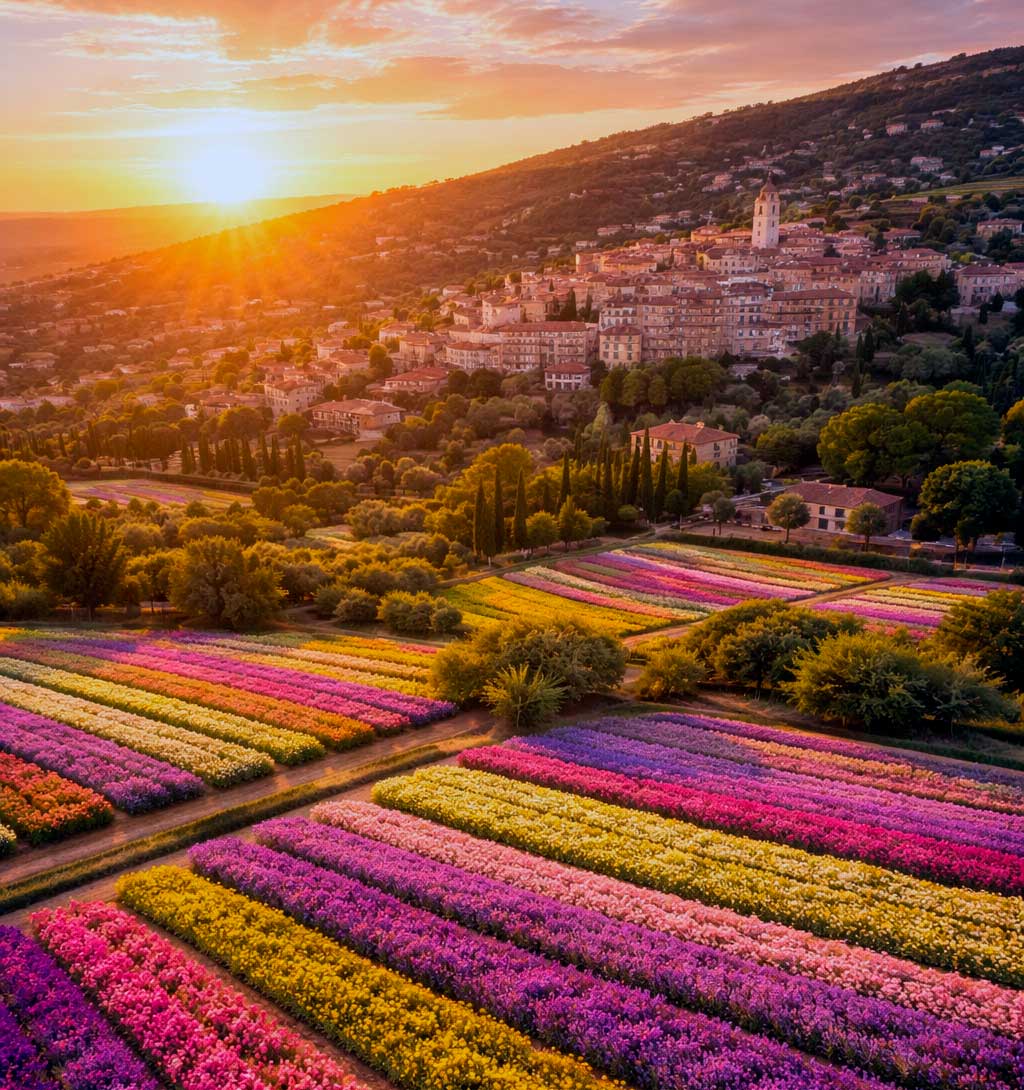
Grasse, in the south of France: for centuries the world's hub of aromatic raw materials and the heart of modern perfumery.
Europe and perfume share a history spanning centuries. What began as an almost ritual, medicinal resource has become a global industry in which the Old Continent continues to set the tone. Discover how modern perfumery was born and where to find the finest European niche fragrances today.
From Monasteries to Grasse: the Birth of Modern Perfumery
In medieval Europe, perfume had little in common with the everyday ritual we know today. It was used primarily for religious purposes and to mask the unpleasant smells of cities without modern sanitation. Monasteries and apothecaries were the guardians of aromatic knowledge, preserving formulas that blended medicine, magic and devotion.
The great turning point came with the first modern alcohol-based perfume in Europe: the famous Hungary Water, created in the 14th century for Queen Elizabeth of Hungary. This innovation marked the shift from heavy, greasy unguents to lighter, more volatile and wearable fragrances.
During the Renaissance, Italy and France took the lead. Refined Italian techniques travelled to the French court through figures such as Catherine de' Medici, and gradually France transformed the art of perfume into a symbol of courtly sophistication. The south of the country, led by Grasse, became a true industrial hub for aromatic raw materials.
In the 18th and 19th centuries, perfumery industrialised. Historic houses such as Houbigant and Guerlain introduced synthetic molecules in fragrances like Fougere Royale (1884) and Jicky (1889): the first 'modern' perfumes that built abstract, stable and highly recognisable structures.
Europe Today: a Mature, Selective and High-Value Market
Centuries on, Europe remains one of the great pillars of global perfumery. Various estimates place the continent at around 27–33% of global fragrance revenues, reflecting a mature, demanding and high-value market.
13B$European market
in 2025
in 2025
27–33%Share of
global market
global market
+20B$Forecast for
2033
2033
In the fine fragrances category — selective and luxury perfumery — Europe holds the largest market share. Its historical heritage and concentration of iconic houses in France, Italy and Switzerland carry enormous weight.
The market is shifting towards sustainability, transparency and artisan perfumery. Brands committed to natural ingredients and cleaner formulas are growing fast.
Europe Versus Other Continents: the Perfume Map in 2025
To understand Europe's current role, it helps to view it alongside the world's other major perfumery regions:
🌍
Europe · 27–33%
The creative and luxury benchmark
Holds a unique historical heritage, concentrates many of the most influential luxury houses, and leads in fine fragrances and niche. France in particular has major export weight.
🌎
North America · ~38%
The largest market by volume
Now the single largest market by economic volume. Major groups such as Coty, Estee Lauder, L'Oreal and LVMH operate there with enormous power. It is also seeing rapid growth in niche and independent brands.
🌏
Asia-Pacific · ~21%
The future growth engine
The fastest-growing region. An emerging middle class and younger generations are adopting fragrance as a status symbol and lifestyle statement.
🧭
Latin America and Middle East
Emerging markets with distinct identities
The Middle East is highly relevant for oud, concentrated oils and intense perfumes. Latin America has a strong culture of fresh everyday fragrances.
From Sole Centre to Creative Lighthouse: Europe's New Role
For a long time, Europe was virtually the exclusive centre of perfumery as we understand it today. Yet the current landscape is very different: the market has become multipolar.
- 01World-leading schools and institutesThe world's foremost perfumery schools — ISIPCA, Givaudan Perfumery School, Institut Superieur du Parfum — are based in Europe. Training the finest 'noses' runs predominantly through the continent.
- 02Founding houses that set global trendsChanel, Dior, Guerlain, Hermes, Byredo, Le Labo, Diptyque... Even the 'independent' brands that triumph globally were born or consolidated in Europe.
- 03Grasse: the world's laboratoryEven today, Grasse remains the nerve centre of aromatic raw material research and production. Major houses such as Firmenich, Givaudan and IFF maintain strategic laboratories here.
- 04Benchmark in niche and auteur perfumeryThe world's most influential niche fragrances — those that inspire trends and become cult objects — emerge predominantly from European capitals such as Paris, London and Amsterdam.
"
Europe has gone from being the monopoly of perfume to being its great lighthouse. It shares the stage with other giants, but continues to set the olfactory language and the luxury narrative of global perfumery.
Europe: From Sole Centre to Creative Reference
The current landscape is multipolar: North America dominates in volume, Asia-Pacific emerges as the great future growth engine, and Latin America and the Middle East bring increasingly influential olfactory sensibilities.
Its historic houses and perfumery culture mean that many brands look to Paris, Grasse, Milan or Geneva. Discover the finest European fragrances at perfumeslarome.com.
Explore our selection of European niche perfumes
Explore niche perfumes →